

Written by Spencer Slater
Aurora Copywriting
The mission of the RSPCA Hull and East Riding is to care for and be the voice of animals in need. Our care for pets ensures that animals are treated with dignity and respect.
As well as benefiting the animals themselves, promoting animal welfare can have profound social benefits. Looking after animals as a shared endeavour can foster inclusivity, bringing together people from diverse backgrounds and with different abilities and experiences.
By creating opportunities to engage with and care for animals, societies can strengthen empathy and understanding and improve the lives of both humans and animals.
Getting Involved in Animal Welfare
 The national RSPCA was founded in 1824 to raise awareness of animal suffering and to prevent cruelty. Over the national RPCA’s 200-year history, they’ve provided a vital service to pets, farm animals, and wildlife. At the heart of everything we do as RSPCA Hull and East Riding are the communities we serve and those who support our work.
We work to involve communities in our activities, as this not only helps us to support more animals in need but also creates opportunities for volunteering and education. We bring people from different backgrounds together, helping them find a common purpose in caring for animals, supporting good outcomes, and feeling valued as part of a community.
Our services rely on volunteers for a range of roles, including feeding, grooming, and walking animals, as well as fundraising, administration, and educational outreach. These roles can accommodate varying levels of experience, mobility, and time commitment, enabling people from all walks of life to become involved.
Micro volunteering opportunities and remote roles have removed further barriers to volunteering, allowing more individuals to support animal welfare.
The role of education
 Educating individuals and communities about animal welfare and good pet ownership can also be a vehicle for greater inclusivity. Schools, community groups, and online platforms can provide programmes teaching young people and others about the needs and care of animals. Helping to protect animals can promote empathy, teamwork, and greater social responsibility.
Our Petwise Project and other initiatives provide structured activities for children and young people, helping them develop new skills, teamwork, and compassion for animals. Animal welfare activities can provide safe environments where children from diverse backgrounds can collaborate, share their experiences, and learn from one another.
Petwise is also inclusive of neurodivergent people and those with disabilities, with activities tailored to meet different learning styles and abilities. We ensure that everyone can participate meaningfully in our activities. From structured volunteering tasks to activities can help to break down barriers, creating spaces where diversity can flourish and be celebrated.
Fostering empathy and social connection
 There is extensive research supporting the anecdotal evidence for the psychological benefits of engaging with animals. People with pets are generally happier, have better health outcomes, and experience lower levels of stress and depression. Not everyone is in a position to have a pet, so animal welfare volunteering and engagement can help to fill the gap.
Caring for animals helps to build empathy, patience, and emotional intelligence, skills that are just as useful for engaging with humans. Volunteers at our rehabilitation centre and participants in our activities will often report increased self-esteem, reduced stress, and a greater sense of belonging. This can have a particularly positive impact on people who may otherwise be facing social isolation or discrimination in their daily lives.
Individuals from very different backgrounds can find a shared purpose and common bond over animals, finding a common language that transcends differences.
By bringing people together around a shared purpose, such as fundraising, wildlife conservation, or fostering animals, we create opportunities for connection.
Through shared activities, people learn to collaborate, communicate and provide mutual support, breaking down stereotypes and supporting inclusion.
Inclusive Volunteering
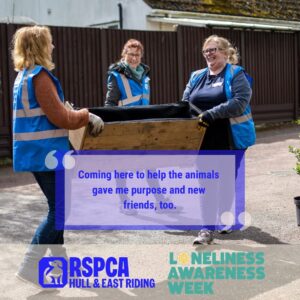 Volunteers power our work, and we take practical steps to ensure we recruit from a broad cross-section of the community. By providing training, mentoring, and support, we ensure everyone can participate safely and effectively.
There is a wide range of different roles suitable for varied abilities and strengths. Volunteers with mobility challenges might focus on administrative or fundraising tasks, and neurodivergent volunteers might excel in structured animal care tasks or work that requires close attention to detail.
By recognising and valuing individual strengths and differences, we strive to create inclusive spaces that benefit not only the animals in our care but also the local community.
Whatever your background, experience, and skill set, we have volunteer opportunities that allow you to make a real difference while supporting your emotional well-being.
You can find more information about volunteering for the RSPCA Hull and East Riding here, or please email our volunteer.coordinator@rspcahull.org.uk and our Volunteer Coordinator will be in touch.

